Featured

Police Dedication to Serving the Public at the Ultimate Cost

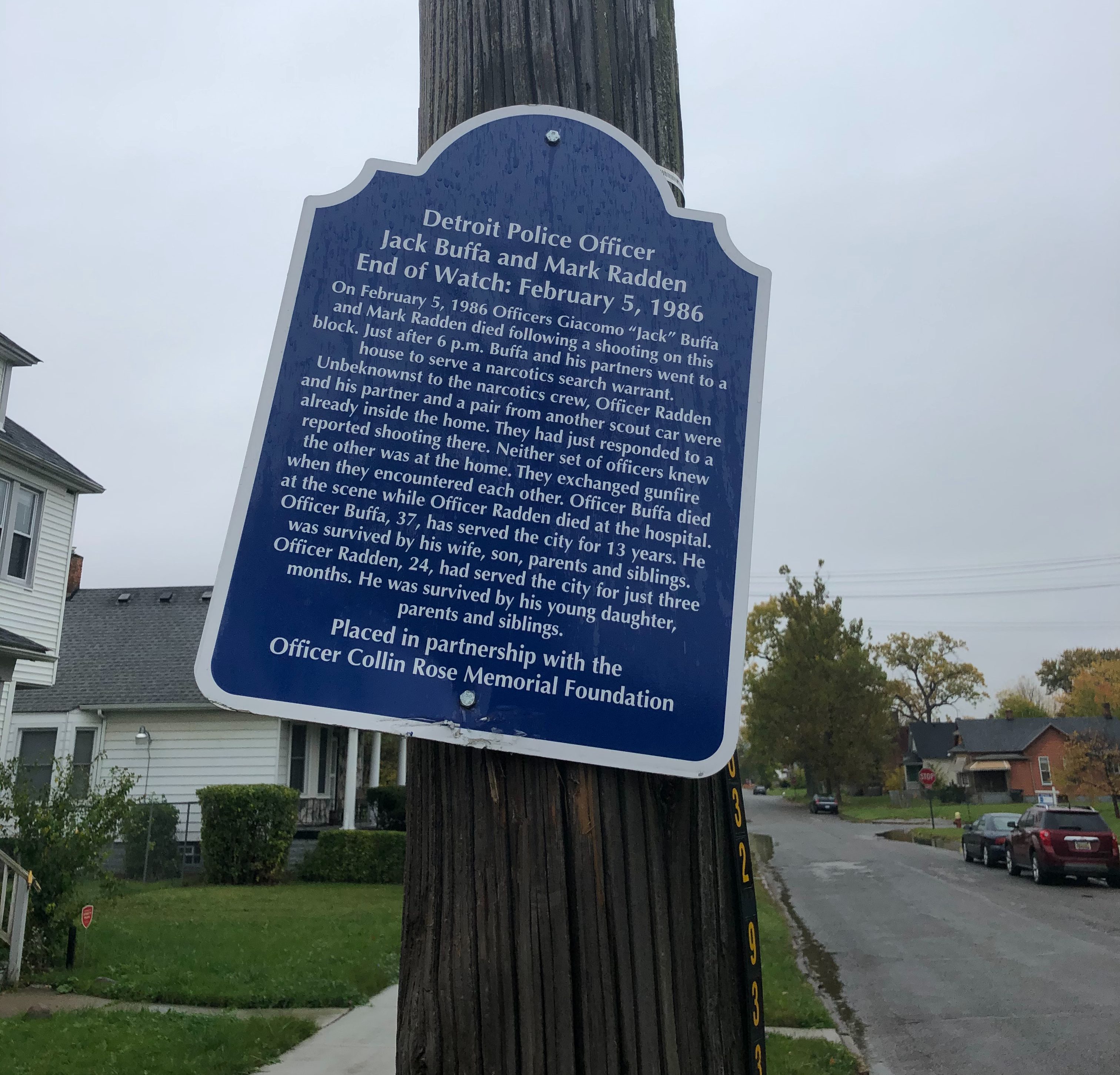
Often the police put themselves in harms way in some obvious situations such as robberies, high speed pursuits, and drug busts. However, it’s when they go beyond the obvious calls of duty become heroes of the neighborhoods they patrol or live in. One can picture the friendly neighborhood Officer on shows from the 50’s like “Leave It To Beaver”, where the Officers were known by all and always willing to help parents teach their kids a good moral lesson. These Officers seem to show a little more care, strength and some have paid the a deadly price for it.

1)-Officer Clarence Cummings was not at his 6 month mark to end his probationary status on the Detroit Police force when on March 25, 1904, his good deed would not go unpunished. Officer Cummings was walking his beat when approached by a lady and her female friend. They were returning from the police station where they were told the police couldn’t assist in a civil issue without a court order which she did not have when her husband threatened her life and locked her out of the house. The ladies asked Officer Cummings if he could assist the wife to get back in her house which he agreed. While walking the lady of the house thru the back door, the husband shot at her missing and shooting Officer Cummings, killing him. At 25 and already a veteran of the Spanish-American war, Officer Cummings desire to assist others showed for care of his new citizen on his new patrol when in distress cost him his life.

2)-A Police Officer is often a police officer in his home neighborhood as well as work and Lieutenant Peter McGuigan’s was one of those officers. His life was lost because of his dedication to the peace, at home or work. Getting ready for work at about 8pm on October 23, 1920, some neighborhood boys came to tell him of a suspicious man in the alley. Lieutenant McGuigan went outside to talk with the man. While talking, the man brandished a gun and shot the Lieutenant and ran. The Lieutenant gave chase after getting shot for a couple blocks before collapsing and dying from his gunshot wounds. Without hesitation, he left the safety of his home to assist the neighborhood with what turned out to be a dangerous man. A true neighborhood policeman to the end.

3)- Often the police are there for us when things aren’t going so well. If you’ve ever been in an car that broke down or had an accident and needed an ambulance or a tow truck, you understand how the police can help you out. Officer Lee Cole of the Royal Oak police department was offering his services to a couple in need when their car broke down in Royal Oak. They needed to get to their home in Detroit. On November 9, 1944 while taking the couple home Officer Cole died when his police vehicle was hit by another car that ran a red light. A veteran of World War I and a 17 year veteran of the police force, one just knows, this was something he probably did a lot….helping anybody any way he can.
Featured

Detroit Race, Riots, and Looting: Stories of the Fallen Officers

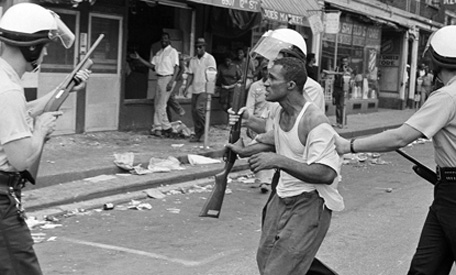
Detroit’s long history of racism, rioting, which sometimes leads to looting, has been documented for over 150 years. From the 1863 riots, to the 1943 or 1967 riots, Detroit’s history has lead to numerous civilian casualties. This Blog details three officers who died due to racial tensions of its citizens, assisted by racist policies and policing.

1)-The 1943 race riots of Detroit had mobs of whites and mobs of blacks, looting, assaulting others and just causing havoc along Woodward into Paradise Valley (aka Black Bottom, or black business district). On June 6, 1943, Officer Lawrence Adam, a five year veteran of the force, responded to the riots on Brush and Vernor, with three other officers. He was shot from a assailant in a parking lot (never to be identified), and taken to the hospital. Meanwhile, his fellow officers continued firing shots at the crowd. Eventually 17 blacks would be killed by officers during this riot. Officer Adam’s seemed to be getting better when just ten days later he would die due to an infection from his gun shot.

2)-Unfortunately, race relations would not improve over the next 25 years, spilling into one of the largest race riots, the 1967 Detroit Race riots. Due to unfair and racist policing, and tactics, numerous black citizens were routinely harassed, beaten or worse. The riots of 1967 were a direct result of such police harassment and the looting of the mostly white businesses were also a result of this harassment as well as systemic racist policies keeping blacks from owning and sharing in much of the money that was to be made in the city. The rioting on July 25th of 1967 included the local A & P on a Holbrook near Woodward. Officer Jerome Olshove was one of the many police responding. While another officer was struggling with a looter, the officers shotgun discharged, killing Officer Olshove. He would be the only police officer killed during the riots. Forty three people were killed due to this riot. Of those 43, 33 were black. Most were killed for looting by police, national guard or store owners and their hired guards, who would not be charged. Many of the killed were disputed as looters and some proven not to be, yet no justice would come for them.

3)-After the 1967 race riots, white flight began, and black power was on the rise and practiced by some black residents. Included in this rise was the black panthers. Their standard distrust of the police would cause more issues for the group, in a city of about 50% blacks with very few represented in police or government. They were harassed but educated on their rights. On October 24, 1970, a plain clothes policeman, Officer Glenn Edward Smith responded to a call of help from two officers attempting to ticket black panther youths distributing literature. When he arrived a gun barrel appeared from out the front bay window of the house at 3376 Sixteenth, a Black Panther Party house. A shot was fired from said gun, killing Officer Smith. A standoff ensued, resulted in 16 people being arrested. None of them would be found guilty, and some may argue that was due to the National Black Panther Party’s extensive knowledge of laws and rights.

Featured

The Deadly Car Running Boards of the 1910’s-1920’s

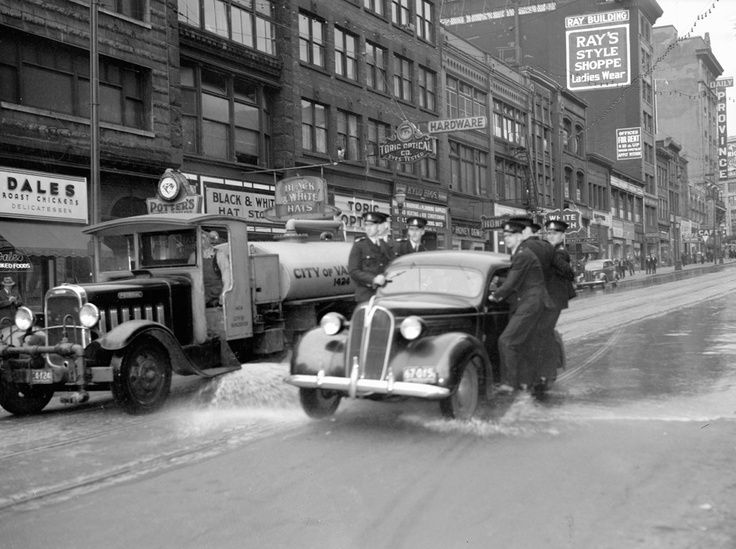
The Police chase scenes in old movies, where the guys are hanging on the car, riding on the running boards on the outside of the car, going what seemed to be about 80MPH (probably more like 35), are always exciting to watch…looking like a gang of cops ready to take care of anybody who gets in their way, not scared of other traffic, or even a slip. Then I started reading more of these fallen officer memorial plaques, and noticed running boards involved in several of them. I never thought about the danger of these awesome holders of heroes, or the fact they stopped making them for a reason. Below are a few tragic stories of fallen officers and these deadly car accessories, and way I started thinking about them much more.

1)- On December 9, 1913, Officer Thomas Madden and his partner pulled over some joy riders at 2am near Woodward and Bethune. The joy riders shot at the police, shooting Officer Madden in the stomach. Officer Madden, the manly type of man he was, jumped onto the side running boards and ordered the joy riders to stop. But the car hit a curb knocking Officer Madden to the ground where he died. One wonders if there were no running boards would Officer Madden have succumbed to his gun shot wound or live to die another day?

2)-This next one makes me think, guys jumping off of these running boards back in the day usually meant they were bad guys. Officer Gordon Davis and his partner were on patrol July 18, 1918 when they saw a vehicle they believed to be wanted for an earlier hit and run accident at Gratiot and Mack. They commandeered a vehicle and told the driver to give chase, while they ride on the running boards, or course. When the driver lost the car they were chasing at some railroad tracks, they ordered the driver to stop, jumped off the running boards and were shot at by police in a vehicle behind them that assumed that Officer Davis and his partner were riding on the wanted vehicle and trying to escape. Officer Davis was killed. One has to wonder, if he actually got in the vehicle instead of riding on the running boards and drove the car, would he have lost the wanted vehicle or caught it and lived to die another day?

3)-The day of October 25, 1924, and the loss of Officer Fred Breslin, makes me think a little deeper about these Running boards. Certainly the cars were big enough to carry more than a couple people and how much time did they save jumping on and off the running boards as opposed to jumping in and out a car? Officer Breslin witnessed a young child get hit by a car. He grabbed the child, stopped a car, put the child in the car, and, of course, got on those running boards to ride to the hospital, blowing his whistle to traffic. Well, the car got hit by a truck and Officer Breslin lost his life. Now, one may wonder, if he got in the car with the kid, or drove the car, would he have lived to die another day?

From Turkeys to Cats, Animals and Detroit Police-Fallen Hero Stories

Animals have played such key roles in so many facets of our daily lives. Throughout history, animals provided services and companionship, such as a guard dog, an indoor cat, a carrier pigeon, a service animal for the blind or a police horse. With so many animals and functions it’s not too surprising to notice a few animals in the stories of these fallen Detroit officers. However, the stories of some of these animals and the roles they played in the deaths of Detroit police officers, are intriguing if not absurd.

1)- We have lost too many police officers in the city while on duty, and we have lost too many animal officers as well. On July 14, 1966, a police horse named Little Reb was walking down Woodward with his policeman Officer Lester Lohmeier. Officer Little Reb had just won a spot on the bureau’s drill team within the previous two months. While patrolling the street, a bus hit Officer Little Reb and Officer Lohmeier throwing Officer Lohmeier and mortally wounded Officer Little Reb, who would die almost an hour later on site, while waiting for a vet to come.
On January 13, 2014, K9 Rookie Remi was in her crate in the back of the patrol vehicle when the driving officer hit a patch of ice and Remi’s crate was ejected, and broke open. Then, Remi was hit by another car that did not stop. Officer Remi was only 2 years old.

2)-This story makes one think about how much a turkey was worth back in 1917. Because Officer Henry Angelo was on patrol December 4, 1917 and noticed some men walking “suspiciously” down the street with a dressed turkey and went to question them. A policeman nearby heard a bunch of gunfire and ran over to find Officer Angell shot 4 times and two men running from the scene. He attempted to give chase with his revolver in hand, but lost them. He returned to Officer Angell finding him dead, and went to alarm the other police. Two brothers were arrested shortly after for the killing and brutal beating of Officer Angell due to a huge police man hunt. Now, were the men suspicious because of the turkey itself or because it was a dressed turkey? We shall never know.

3)-Cats have 9 lives. Sometimes one of their lives can also cost a human their only life. Such was the case when Officer Arthur Louis Pascolini, on July 2, 1929 responded to a call of a cat injured when hit by a car. Now having lived in the city over a quarter of a century, this alone hits one as odd. Especially odd after reading all the numerous ways officers were being killed during this time. How odd a call was made to help an injured cat, and an officer responded.
Anyway, on with the story. Seeing the cat was in misery and feeling obligated to relive the cat of that misery, Officer Pascolini pulled out his revolver to shoot the cat to death. The revolver discharged as he was removing it from his holster, shooting himself. His partner took him to the hospital immediately where he died from blood loss. No information on whether the cat survived or not was found, but one has to have a feeling the car accident was only the cats 4th or 5th life.